
At a glance
- Truck body liners experience wear from sliding abrasion, impact during loading and repeated unloading cycles.
- Routine inspections reveal early signs of thinning, scoring, gouging and joint movement before they affect flow behaviour or tipping performance.
- Monitoring unloading behaviour helps identify early signs of wear before physical damage is obvious.
- Recognising these signs supports timely liner replacement and helps maintain smooth discharge, consistent cycle times and reliable fleet performance.
Truck body liners are subject to repeated sliding abrasion and impact loading from materials such as quarry rock, road base, sand, soil, and demolition rubble. Over time, this wear increases surface friction, affecting material flow behaviour, tipping performance and unloading efficiency.
Routine inspection is the most reliable way to detect thinning, scoring, gouging and wear at panel seams and fixings before these issues affect liner function. Inspection also helps prevent unplanned downtime, maintain predictable cycle times and limit material hang-ups caused by surface degradation.
This article covers the causes of liner wear, how to inspect a truck body liner for wear and when replacement is required.
Common Causes of Liner Wear in Heavy-Duty Applications
Truck body liner wear results from consistent mechanical forces applied to the same areas across repeated operating cycles.
- Road base, rock, sand, soil and demolition material slide across the liner every time the truck is loaded and tipped. Over time, this contact wears down the surface.
- Larger or jagged pieces strike the liner during loading. These impacts gouge into the surface, leaving localised damage that deepens with use.
- Corrugated roads subject the tray to continuous vibration, which accelerates fatigue-related damage and wear.
- Fine particles and moisture stay in contact with the liner during discharge, especially around impact and discharge areas, increasing localised wear.
- Continuous loading and unloading cycles increase friction around tray corners and discharge zones, where wear typically develops first.
How to Inspect Truck Body Liners for Wear
Inspecting a truck body liner for wear starts with knowing where to look and understanding what each wear pattern means. Effective inspection combines visual checks of the liner with observing how material discharges during tipping.
Assess Surface Wear Patterns
Start with the primary flow path. Walk the length of the tray and examine the floor where material moves most frequently. Early wear typically develops here, first as surface polishing and then as gradual thinning as material follows the same discharge path on every cycle.
Run your hand across the floor to feel for uneven texture or patches that have lost their original surface condition. Any polished or thinned area is an early indicator of surface wear.
Check for Gouging, Scoring and Impact Damage
Inspect the zones that experience the greatest impact from loading by large aggregates or uneven loads. These areas take the brunt of repeated impact, so they tend to show more pronounced wear than the rest of the tray. Look closely at the floor and headboard for grooves, gouges or raised edges formed by repeated impact loading.
These surface defects interfere with how the material slides during discharge and tend to worsen with continued use. Even minor ridges or cuts should be noted during inspection, as impact damage progresses with repeated loading.
Inspect Fixing Hardware and Joint Integrity
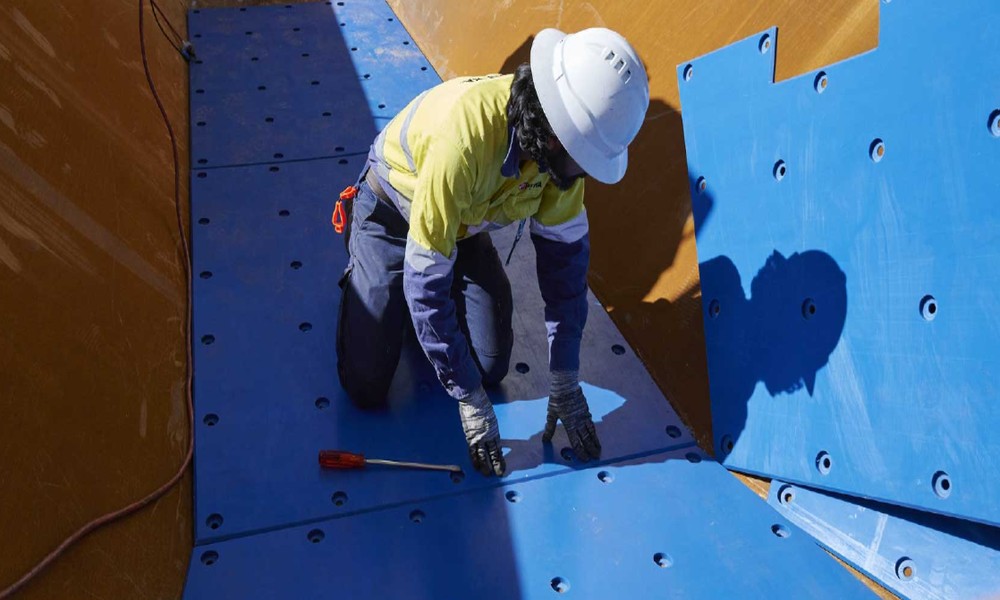
Inspect fixing points, cover strips and panel joints along the floor and side walls for alignment and stability. These areas are subject to continuous vibration and material movement during transport, which increases the likelihood of joint loosening or separation over time.
Check for wear around fasteners to ensure the liner has not worn thin or that fixing points are not exposed. Also, look for recessed fixings where the surrounding material has worn back or joints that are no longer aligned. Where fixings become exposed, they may corrode or deform, creating points that impede material flow during discharge.
Gaps where fines accumulate or where liner edges no longer sit flush increase friction during unloading. Keeping the liner properly supported across all joints helps maintain consistent discharge behaviour and limits progressive wear around fixing points.
Observe Changes in Material Flow During Unloading
Watch how the load moves during tipping. Change in flow behaviour often highlights wear before it becomes visible. Material should slide at a predictable angle and discharge in a smooth, continuous flow.
As liners wear, hang-up commonly occurs where surface roughening, gouging or exposed fixings interrupt flow. A higher tipping angle required to initiate discharge is another clear operational signal of liner wear. Consistent observation during unloading helps identify developing wear before it becomes visible.
Warning Signs That It’s Time to Replace the Liner
If the inspection indicates advanced wear, the liner has reached the end of its service life and should be replaced. Here are some warning signs:
- Sections of the liner floor are worn thin enough to approach or expose the parent material.
- Scoring or gouging is deep enough to affect sliding performance and disrupt material flow.
- High spots, lifted edges or bowed sections interrupt smooth discharge and alter flow paths.
- Distortion is visible in high-impact zones due to repeated heavy loading and sustained impact.
- Hang-up persists even with higher tipping angles and well-maintained hoists.
- Unloading requires noticeably higher effort or shows inconsistent flow patterns due to severe surface wear.
- Wear has progressed towards fixing points, exposing hardware and introducing points where material can catch during discharge.
These conditions mean the liner is no longer providing reliable wear protection or low-friction performance, and its replacement should be scheduled before structural wear reaches the tray.
Routine inspection of truck body liners helps fleets track wear progression across the floor, corners and discharge zones, enabling repairs and replacements before material flow or tipping performance is significantly affected. Planned replacement of worn liners helps maintain predictable cycle times, consistent tipping behaviour and reliable material flow across quarrying, construction, waste and bulk material transport.
When replacement is required, premium UHMWPE liners, such as OKUSLIDE®, support long-term fleet performance by reducing abrasion, limiting gouging and minimising hang-up across a wide range of bulk materials, helping restore smooth unloading and lowering the likelihood of unplanned repairs.