
Introduction
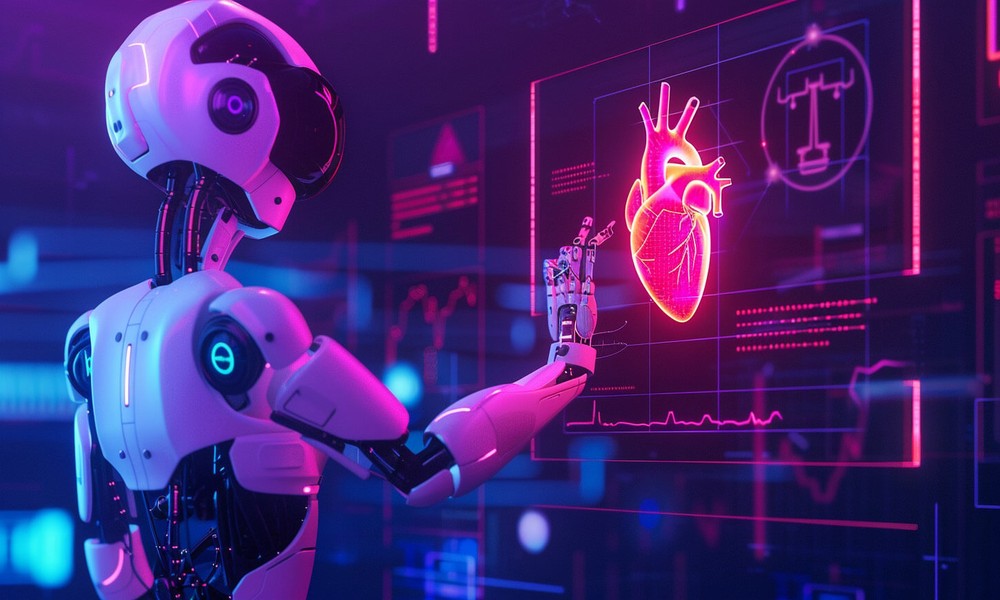
In today’s fast-paced world, where every second can impact healthcare outcomes, Artificial Intelligence (AI) is emerging as a transformative force in medical diagnostics. One of the most promising applications lies in medical imaging. Traditionally reliant on expert interpretation, medical imaging is now benefiting immensely from the speed and precision of AI. From X-rays and MRIs to CT scans and ultrasounds, AI accelerates the diagnostic process, often delivering insights in seconds. Medical professionals enrolling in an Artificial Intelligence Course in Bangalore and such cities gain the technical skills and domain-specific expertise required to work at the forefront of AI in medicine.
This blog explores how AI is revolutionising medical imaging, the tools driving this transformation, real-world applications, and what this means for patients, doctors, and the future of medicine.
The Challenge of Traditional Medical Imaging
Medical imaging is crucial in diagnosing diseases from broken bones to complex cancers. However, the traditional approach is often time-consuming. Radiologists must examine hundreds of images daily, interpret results, and communicate findings-an intense workload that increases the risk of fatigue-induced errors and diagnostic delays.
Moreover, in regions with limited access to trained professionals, patients may have to wait hours or even days for their scans to be interpreted. These delays can be critical in time-sensitive conditions like strokes or internal bleeding, where minutes matter.
How AI Speeds Up Medical Imaging
AI leverages deep learning algorithms that can be trained to recognise specific features in medical images, such as tumours, lesions, or fractures. Once trained, these models can analyse new photos almost instantly. Here is how AI is streamlining the process:
- Rapid Image Analysis: AI systems can evaluate scans within seconds, highlighting areas of concern for radiologists to review. This acts as a second opinion and reduces the time to diagnosis.
- Prioritisation: AI can triage emergency cases automatically. For instance, in a hospital setting, an AI might detect signs of a stroke in a CT scan and push it to the top of a radiologist’s review list.
- Consistency: Unlike humans, AI does not suffer from fatigue or subjective bias, offering consistent image analysis around the clock.
- Integration with Electronic Health Records (EHRs): Some AI models can connect image findings with patient history, lab tests, and other data sources to deliver context-aware interpretations.
Real-World Applications in 2025
As of 2025, AI-powered tools are used in hospitals and diagnostic labs worldwide. Some notable applications include:
- Lung Cancer Detection: In some studies, tools like Google’s AI model have been shown to detect lung cancer from CT scans with greater accuracy than trained radiologists.
- Breast Cancer Screening: AI algorithms are helping radiologists in mammogram analysis, reducing false positives and ensuring timely intervention.
- Stroke Diagnosis: AI can rapidly identify blockages or bleeding in the brain, enabling immediate treatment decisions and reducing the likelihood of long-term disability.
- COVID-19 and Pneumonia Detection: During the pandemic, AI tools were deployed to quickly analyse chest X-rays and CT scans to probe the status of lung infections, aiding faster decision-making.
- Ophthalmology and Diabetic Retinopathy: AI systems can examine retinal scans to detect early symptoms of retinopathy, glaucoma, or macular degeneration, often outperforming manual review in rural areas where eye care specialists are rare.
Behind the Scenes: How the Technology Works
AI in medical imaging is primarily powered by Convolutional Neural Networks (CNNs), a deep learning model specifically developed for image processing. These models are trained on several labelled images, learning to distinguish standard patterns from anomalies.
To ensure accuracy, models undergo rigorous testing, often benchmarked against expert radiologists. In addition, tools are now being developed with explainable AI (XAI) techniques. These techniques highlight areas in an image that influenced the AI’s decision, helping doctors trust and verify the results.
Benefits for Healthcare Professionals
AI is not replacing radiologists-it is empowering them. By automating repetitive tasks and flagging anomalies quickly, AI allows professionals to:
- Spend more time on complex cases.
- Reduce burnout from high workloads.
- Improve diagnostic accuracy
- Work more efficiently in understaffed settings.
Hospitals are increasingly adopting AI not only to enhance diagnosis but also to optimise workflows and resource allocation.
Impact on Patients and the Healthcare System
For patients, the benefits are equally significant. Faster diagnosis leads to:
- Earlier treatment initiation
- Better health outcomes
- Shorter hospital stays
- Reduced medical costs
In low-resource settings, AI can act as a virtual assistant where human radiologists are unavailable, improving access to quality care. This is especially impactful in rural areas and developing countries with common diagnostic delays.
Ethical and Regulatory Considerations
Despite the possibilities it harbours, the use of AI in medical imaging comes with challenges. These include:
- Data Privacy: Protecting patient data while training and deploying AI models is a top priority.
- Bias in AI Models: If training datasets lack diversity, models may perform poorly on certain population groups, raising concerns of health inequality.
- Regulatory Approval: Before widespread adoption, AI systems must pass stringent clinical trials and receive approval from bodies like the FDA or EMA.
Researchers and developers focus on ethical AI design, transparent validation, and ongoing post-deployment monitoring to address these.
Skills Needed to Work in AI-Powered Healthcare
With AI reshaping diagnostics, there is growing demand for professionals who can build, interpret, and manage these systems. These skills can be acquired by enrolling in courses conducted in urban learning centres. Thus, taking an AI Course in Bangalore, Mumbai, Pune, or Hyderabad can be an excellent first step. Such courses typically cover the foundational knowledge of AI, machine learning, image processing, and healthcare applications, enabling learners to contribute meaningfully to the industry.
Participants gain hands-on experience with real datasets and learn how to navigate the regulatory and ethical frameworks essential in healthcare.
A Glimpse into the Future
As AI continues to evolve, the future of medical imaging looks promising. We can expect:
- Greater integration with wearable devices and point-of-care diagnostics
- Real-time imaging and diagnosis during surgery
- Personalised diagnostic models tailored to individual patients
- Use of multimodal data-combining imaging, genomics, and clinical history-for more profound insights
Furthermore, educational institutions are adapting fast and there are several options for medical professionals to learn AI technologies that are relevant to their domain.
Conclusion
AI in medical imaging is not just speeding up diagnosis-it is revolutionising the entire diagnostic workflow. With the ability to process scans in seconds, flag critical issues, and assist radiologists with precision, AI saves lives and reshapes healthcare delivery.
As more hospitals, clinics, and startups invest in this technology, the need for skilled professionals is higher. Whether you are a medical practitioner, developer, or student, understanding the AI landscape can place you at the cutting edge of healthcare transformation.
Now more than ever, investing in the proper education and skills is key to contributing to this exciting frontier-and cities like Bangalore, Mumbai, Pune, and Hyderabad, with their vibrant tech and healthcare ecosystem, are ideal places to start.
For more details visit us:
Name: ExcelR – Data Science, Generative AI, Artificial Intelligence Course in Bangalore
Address: Unit No. T-2 4th Floor, Raja Ikon Sy, No.89/1 Munnekolala, Village, Marathahalli – Sarjapur Outer Ring Rd, above Yes Bank, Marathahalli, Bengaluru, Karnataka 560037
Phone: 087929 28623
Email: enquiry@excelr.com