
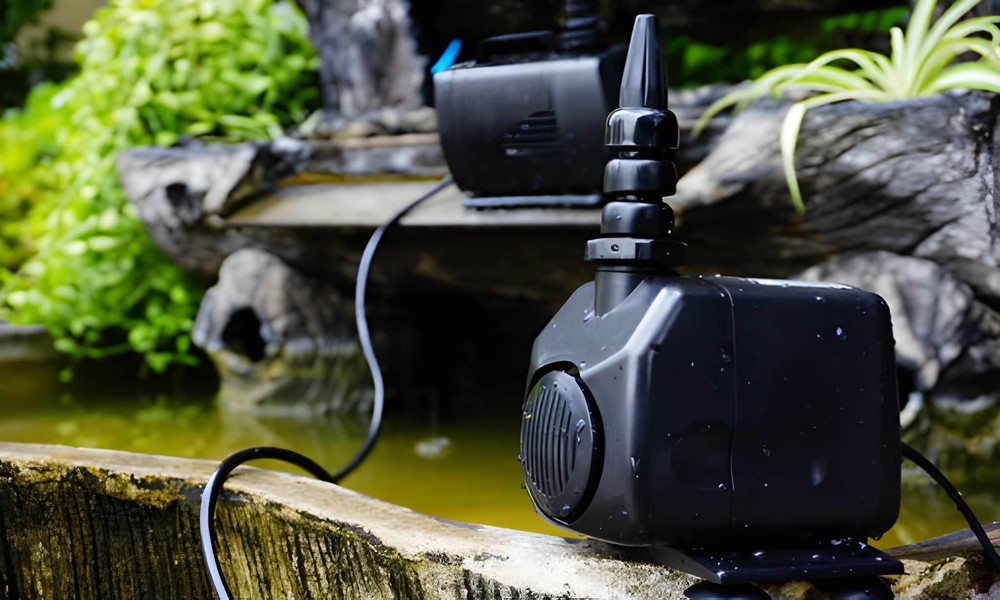

Ever stood by your pond listening to that gentle bubbling? Peaceful, but have you wondered what is actually inside that little box making it happen? Not until one packed up, and I had to figure out replacements. Turns out they are properly clever things.
If you prefer a quiet one, then grab a quiet pond airpump from That Pond Guy website. Their Charles Austen ET series barely makes a sound. You forget it is running until you see healthy water. My mate swapped his noisy one. The garden is peaceful now. I was impressed.
It Works Like a Speaker
Right. Bit weird, but bear with me. Inside a speaker, you have a magnet and a wire coil. Electricity makes the coil move, pushing the speaker cone, making sound. Same principle here.
You have got this magnetic rod inside. Surrounded by electromagnets. Switch on and alternating current flows through those electromagnets, changing polarity fifty or sixty times every second. The magnetic rod gets shoved back and forth. Forwards and backwards. Really fast.
What Happens Next
Attached to that rod are rubber diaphragms. Little flexible discs. As the rod shuttles, these stretch in and out.
- Stretch in? Creates a vacuum. Air is sucked in through one-way valves.
- Push out, and air is forced out through other valves.
Both sides work together. One sucks while the other blows. Constant flow. Air travels down the hose, through the air-stone, and bubbles up through the pond.
Why Choose This Type?
- No wearing motor parts. Nothing rubs together.
- Long life. 20,000 hours plus easy.
- Energy efficient. Cheaper to run than you would think.
- Quiet. Gentle hum. No clanking.
- Oil-free. No mess. No remembering to top up.
The only bit that wears eventually is the diaphragm. Even that is replaceable with a service kit. New diaphragm. New valves. As good as new.
Things Worth Knowing
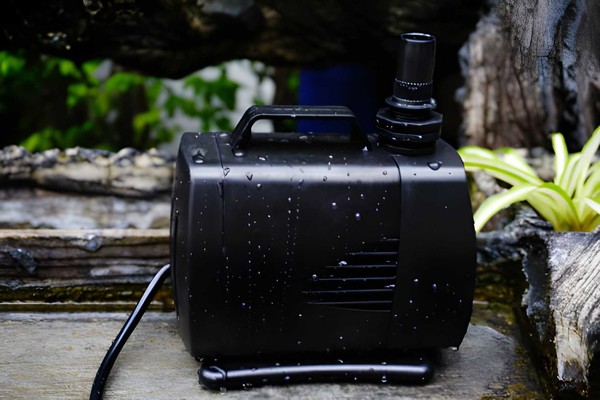
Stroke length changes apparently. At open flow, with no back pressure, the stroke is longest. As pressure increases, the stroke shortens, hence the flow curve is steeper than that of other pumps.
For pond aeration, pressure is low, and run times are long. Often continuous. Perfect match, really.
Typical pressures are around 150 to 200 mbar. Flows from 60 to 120 litres per minute for decent ponds. Bigger pumps do 400 litres for commercial setups.
Power Stuff
Must run on AC. Cannot do DC direct. But you can use an inverter if off-grid. Efficiency makes it worth it.
Energy matters when the pump runs 24/7. Good linear pumps use about 0.6 to 0.7 watts per litre of air. Adds up over the year. Worth getting an efficient one.
Other Uses Too
These pumps turn up everywhere, actually:
But for garden ponds? Ideal, reliable, quiet, and efficient. Set and forget.
Bottom Line
Simple really. The magnet moves back and forth. Diaphragms suck and blow. Air down the hose. Bubbles out. Fish get oxygen. Peaceful garden. No oil. No messy maintenance. Just years of quiet operation. Makes that bubbling even more satisfying, honestly.